Before an assistant recommends your product, or a search engine shows a panel about your company, something has to decide what your company actually is. Not your pages: the thing behind them. A name, a website, a logo, what you make, who runs it. In search, that thing is called an entity.
I'll be upfront about the limits here. Nobody outside Google, OpenAI and the other AI companies knows exactly how they weigh these signals, and anyone who tells you otherwise is guessing. What I can tell you is what makes the facts easy to find and hard to misread. That's within your control, and it's cheap.
I'll use Iconfyra, an icon font, as the running example.
Pick one name and use it everywhere
This sounds trivial until you audit it. Is it "Iconfyra", "IconFyra", "Iconfyra Icons" or "iconfyra.com"? On the site, in the page titles, on GitHub, on LinkedIn, in the npm package description?
A person reads all four as the same company without thinking. A system piecing together facts from many sources has to decide whether they're one thing or four. Choose the exact spelling and capitalization, write it down, and use it in every place you control.
Write an About page that states facts
Many About pages are mission statements. Useful for the brand, not much use to a machine trying to answer "what is Iconfyra?" The page should say, in plain sentences near the top:
- What it is: "Iconfyra is an icon font for web and app interfaces."
- Who makes it and where the company is based.
- When it started, and anything specific that sets it apart.
- Links to the official profiles elsewhere.
Write the first sentence so it could be quoted on its own. If an assistant lifts one line about you, that's the one you want it to lift.
Say the same thing in structured data
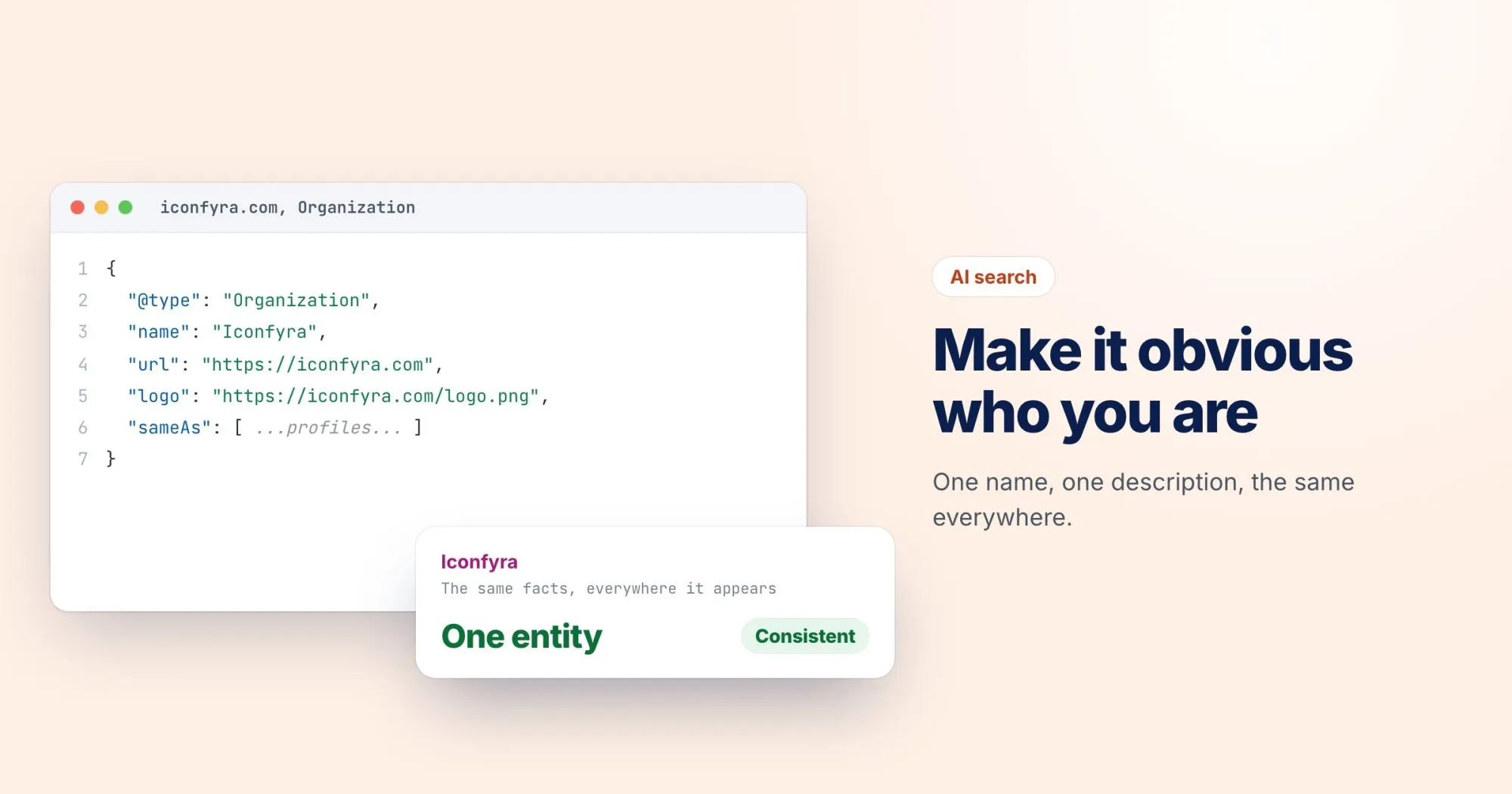
Organization markup on the home page restates those facts in a form machines don't have to interpret:
{
  "@context": "https://schema.org",
  "@type": "Organization",
  "name": "Iconfyra",
  "url": "https://iconfyra.com",
  "logo": "https://iconfyra.com/logo.png",
  "description": "An icon font for web and app interfaces.",
  "sameAs": [
    "https://github.com/...",
    "https://www.linkedin.com/company/..."
  ]
}
Two things matter more than the rest. The name must match the name you chose above, exactly. And sameAs should list only profiles you really own and keep up to date. A dead account from 2019 is a link to stale facts. (If you generate markup like this from code, this post on JSON-LD covers keeping it valid.)
Make the descriptions agree
Open every profile you listed in sameAs and read the short description on each. I often find three different stories: one from launch, one from a rebrand, one a founder wrote at midnight. They don't need identical wording, but they should agree on what the company is and does. Contradictions are exactly what a system resolving an entity has to guess around.
Give your authors pages too
If you publish articles, people are entities as well. An author page with a real name, a role, a short bio and links to their own profiles makes it clear who wrote what. Reference it from each article's markup as the author, and the page has both a person and a company behind it.
Checking one page
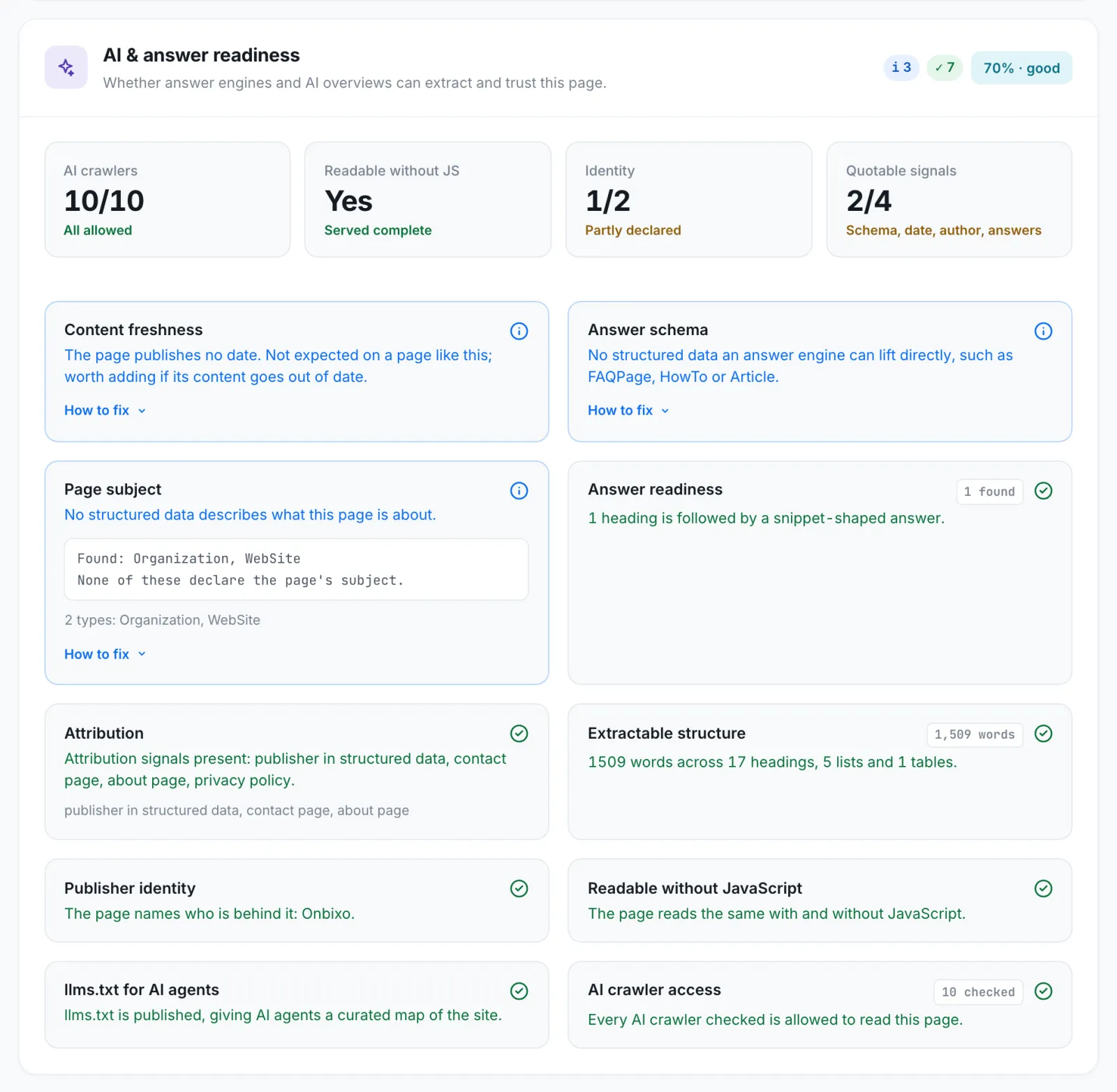
In the AI & answer readiness section, a WebRankPage report looks at whether a page's structured data names who's behind it, as a publisher or author. It won't tell you whether ChatGPT has your company right. For that, ask it, and ask again after the fixes have been live for a while.